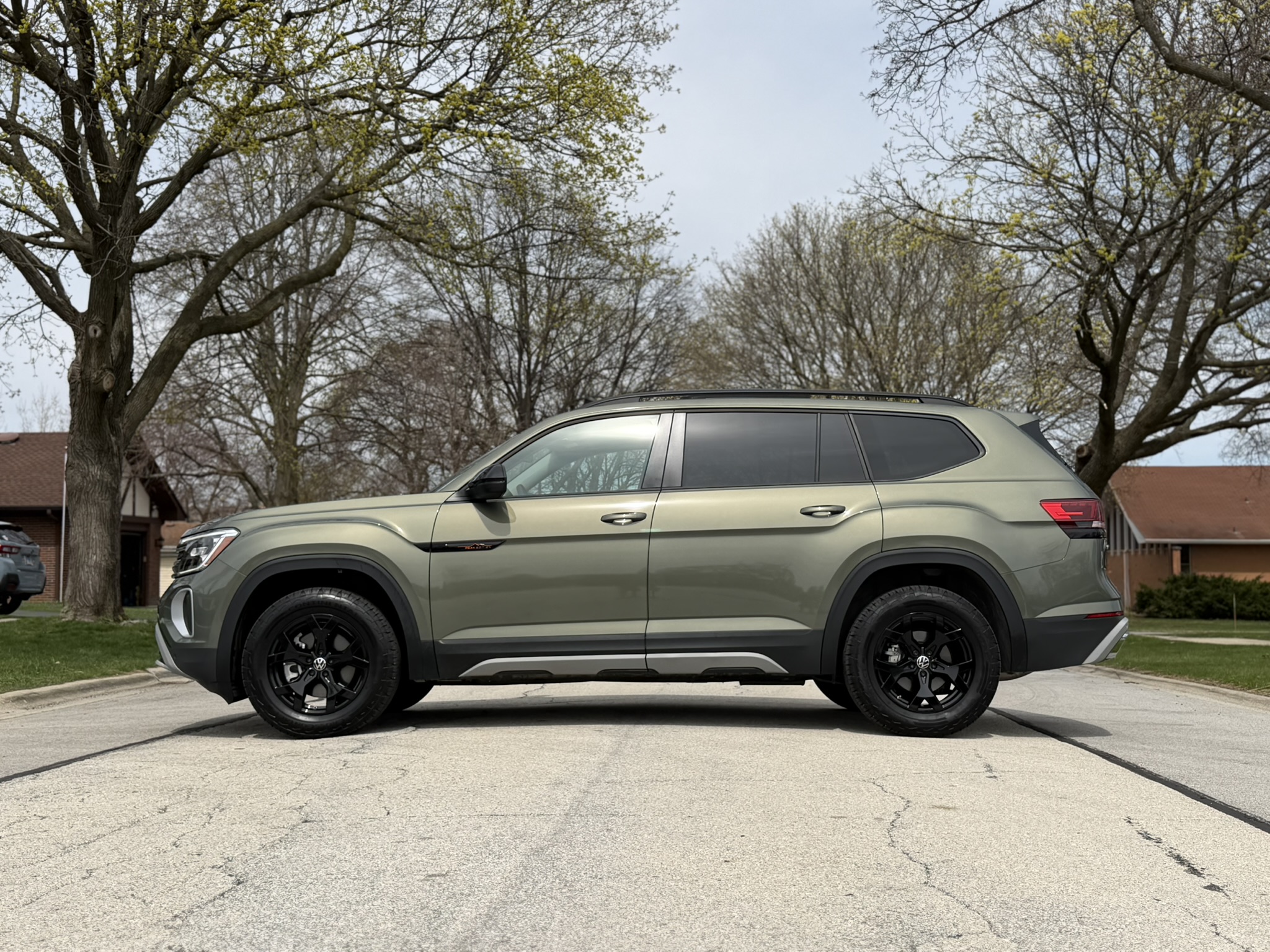
2026 Volkswagen Atlas
One of the roomiest in the segment adds some off-road character
Test Vehicle: 2026 VW Atlas Peak Edition
Exterior Color: Avocado Green Pearl
Interior Color: Black Leatherette with Orange Stitching
Powertrain: 2.0 TSI 16-Valve DOHC turbo 4-Cylinder 4Motion AWD
Notable Options: None
Price as tested: $49,535 (with destination charge)
Pros: Spacious Interior, Improved Turbo Engine, Upscale Materials, Standard Safety Tech
Cons: Frustrating Touch Controls, No Hybrid Option, Average Handling
When the Volkswagen Atlas arrived for the 2018 model year as VW's new mid-size three-row crossover it was accepted with open arms and received a lot of praise. It continues to provide seating for six or seven passengers depending on the configuration. As it rolls into the 2026 model year, the Atlas carries over its 2024 refresh and prepares for an updated 2027 model. Along with styling updates from 2024, a 2.0-liter turbo powertrain is standard bringing better torque and acceleration than previous engines and improved fuel economy compared to the old VR6. The engine pumps out 269 horsepower and 273 lb-ft of torque. On all Atlas models, an eight-speed automatic transmission sends power to either the front wheels or to all four wheels when equipped with 4Motion with Active Control all-wheel drive. The Atlas is rated to tow up to 5,000 pounds when properly equipped.
It is available in five primary trim grades known as SE, SE with Technology, Peak Edition, SEL, and SEL Premium R-Line. Prices start at $39,310 for a standard SE and up to $54,630 for the Premium R-Line. The Atlas competes against competitors such as the Chevrolet Traverse, Ford Explorer, Honda Pilot, Hyundai Palisade, Kia Telluride, Mazda CX-90, Jeep Grand Cherokee L, and Toyota Grand Highlander. I spent time in a Peak Edition and here's what stood out...
Exterior Style:
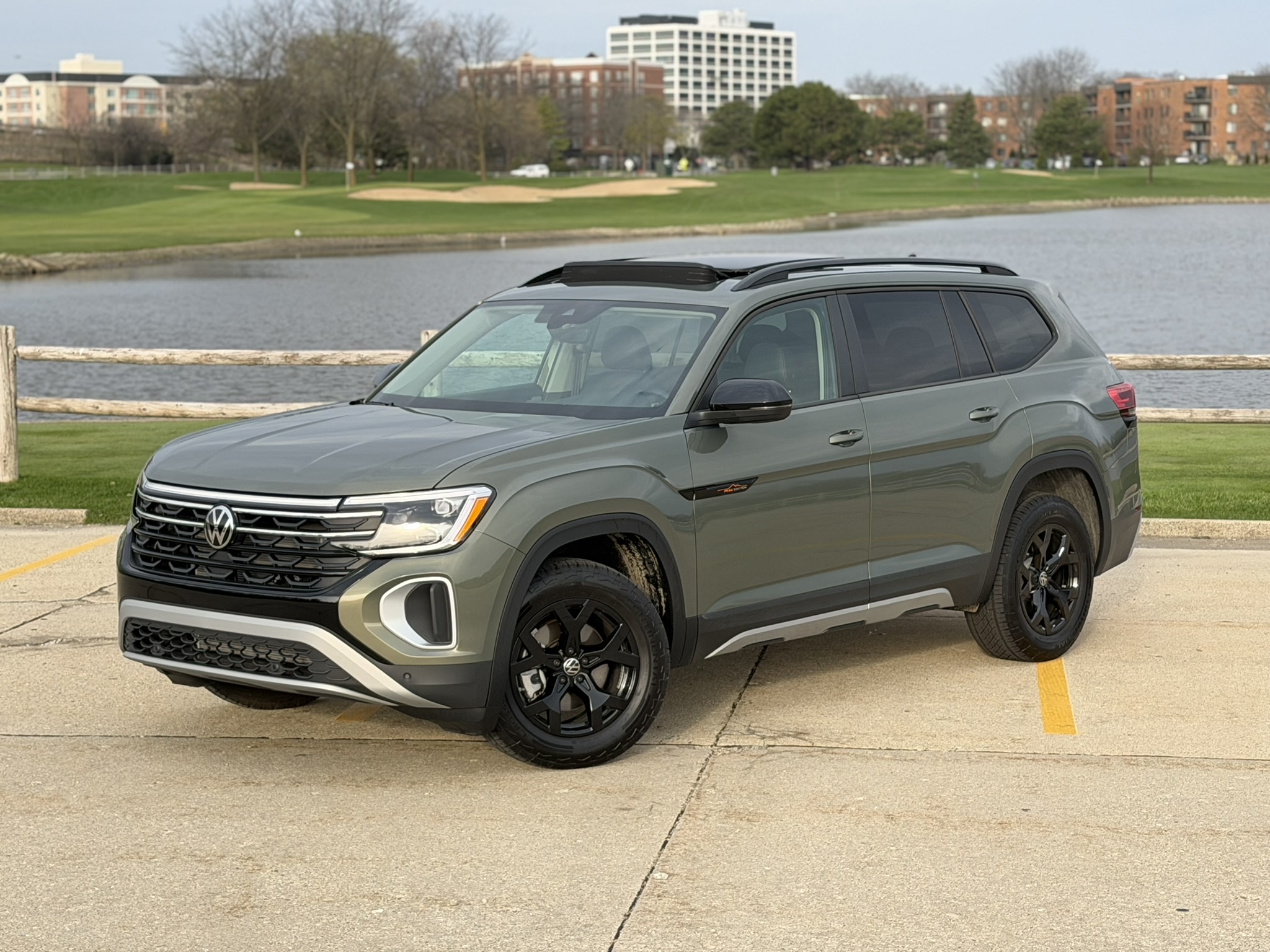
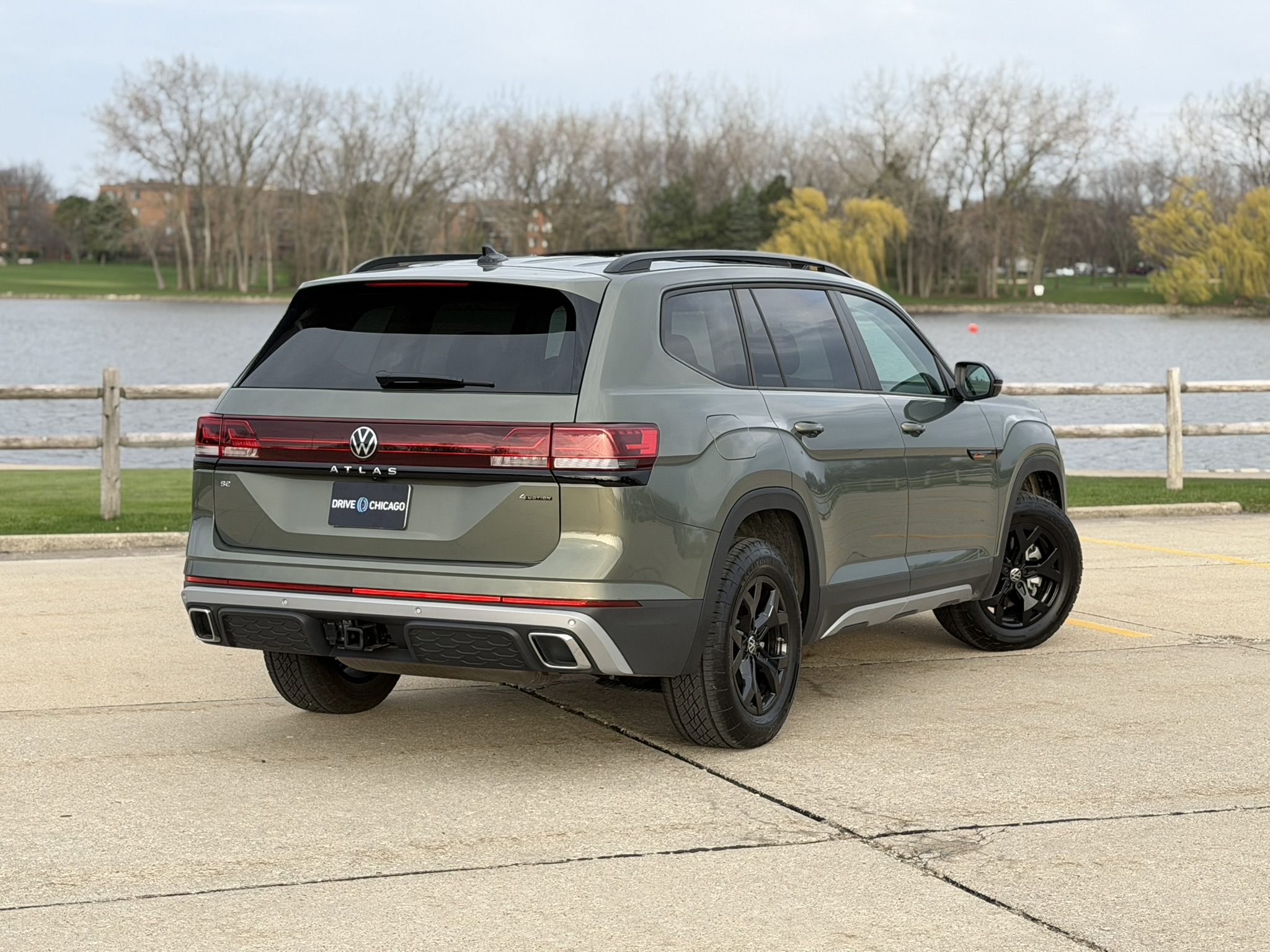
The Atlas is a more traditional looking 3-row SUV that carries over its styling updates from 2024. The front-end design features a wide chrome four-bar grille framed by LED headlights. LED daytime running lights wrap around the headlights and continue across the grille with an illuminated light bar and VW logo for a premium look at dusk / night. The lower front fascia has an integrated air intake. The side profile remains generally the same with front and rear fascias that wrap around. Proportions are good with a long wheelbase and short overhangs. Traditional window designs provide a clean aesthetic. Around back, a red-light panel extends across the entire hatch above a chrome strip with the ATLAS name across it. A new lighting signature with an illuminated light bar and VW emblem stretches across the hatch to further define the Atlas at night. Up top is a larger spoiler than the outgoing model, lengthening the overall roofline of the vehicle and giving it a sleeker side profile. Coming in 2027 will be an updated design with a revised front and rear end and updated LED lighting elements.
The Atlas lineup features a limited choice of exterior colors that all have a more earth tone feel and were chosen to enhance its premium nature: Opal White Pearl, Deep Black Pearl, Pure Gray, Avocado Green Metallic, Mountain Lake Blue Metallic, and Silver Mist Metallic.
Wheels:
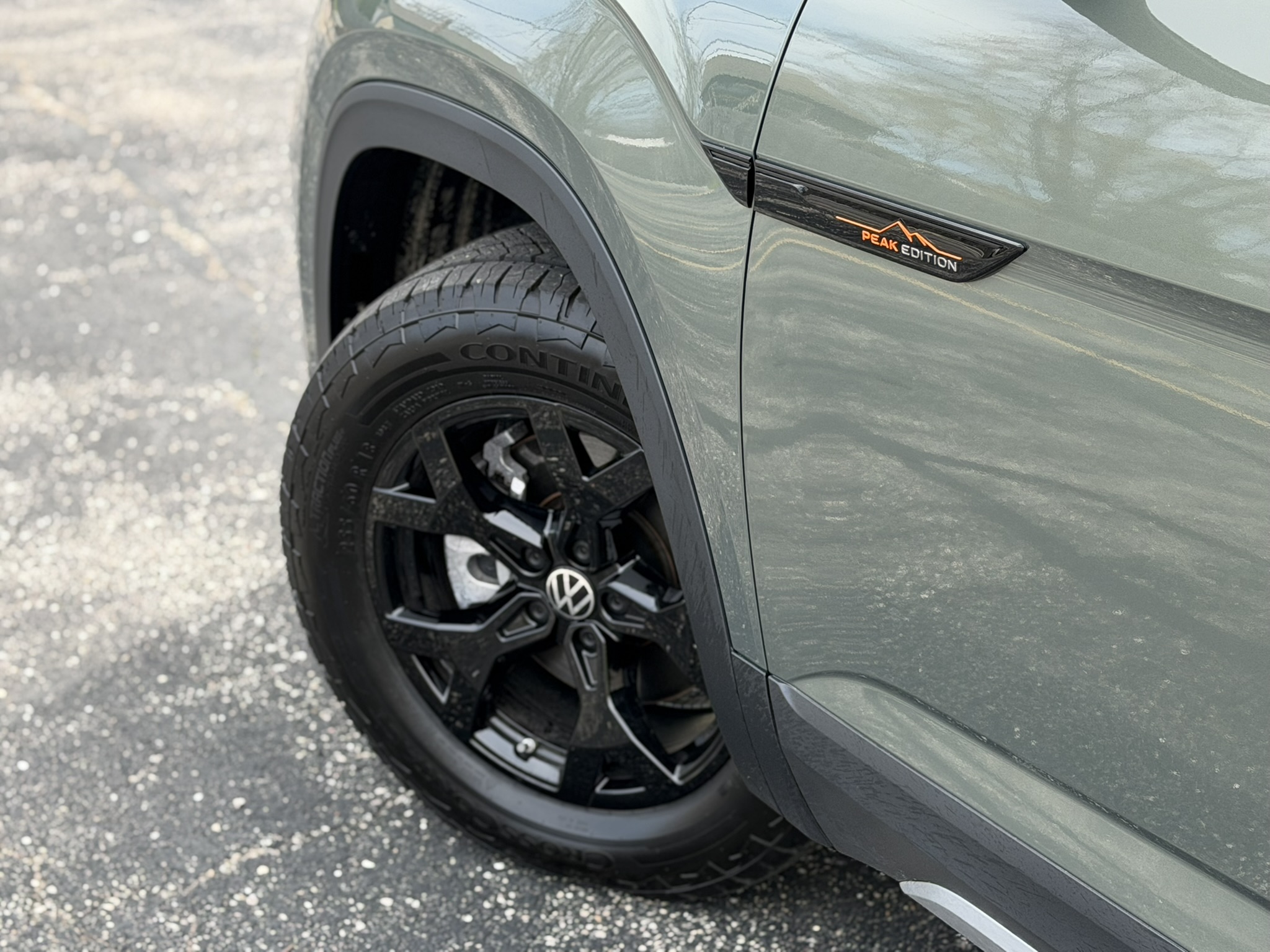
18" machined aluminum-alloy wheels wrapped in 245/60 all-season tires are standard, with 20" machined alloys with 255/50 all-season tires on SE with Technology and SEL models. SEL Premium R-Line trims up the ante with 21" two-tone machined alloy wheels with 265/45 all-season tires. Peak Edition models feature 18-inch black alloy wheels equipped with 255/60 all-terrain tires, bolstering the versatility of the Atlas.
Peak Edition:
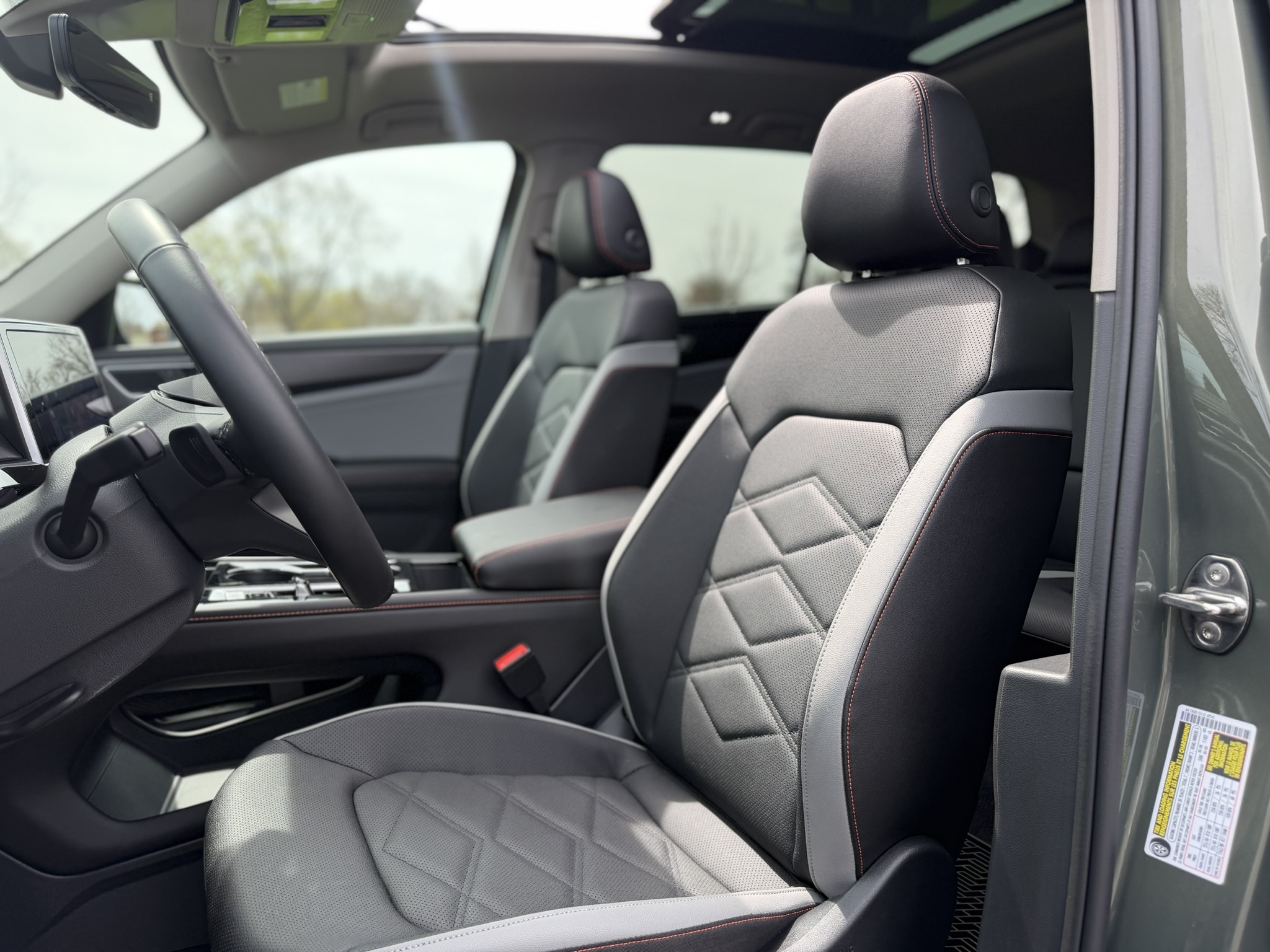
The Atlas Peak Edition is the rugged-looking version of Volkswagen’s three-row SUV, blending family practicality with outdoorsy styling cues. It sits between the SE w/ Technology and SEL trims in the Atlas lineup and comes standard with AWD. It stands out visually from the rest of the Atlas lineup with a more rugged theme. Key styling features include gloss black exterior accents, silver lower body cladding and skid-plate-style trim, unique Peak Edition badging, and 18-inch black alloy wheels wrapped in all-terrain tires. Like other Atlas’ it also comes with LED headlights with adaptive lighting and illuminated front and rear VW logos. Inside, it gets several trim-specific touches like leatherette seating surfaces, heated and ventilated front seats, heated steering wheel, orange contrast stitching, backlit dashboard trim, and stainless-steel pedals. The Peak Edition is more appearance based and could be classified as more “soft-road” than a true off-road SUV. The all-terrain tires and AWD improve confidence in snow, gravel, and dirt roads, but ground clearance remains modest at 6.3 inches and there is no low range for intense off-roading.
Powertrain:
Volkswagen made a major change under the hood of the Atlas in 2024 by dropping the previous two engines in favor of a 2.0L 4-cylinder TSI engine that produces 269 horsepower and 273 lb-ft. of torque on regular fuel. This change generated an increase of 34 horsepower and 15 lb-ft of torque over the previous generation 4-cylinder. It's slightly less than the outgoing V6’s 276 horsepower but is more efficient. The new engine has an improved throttle response that feels less sluggish than the previous generation. With a little more pep, it will get from 0-60 MPH in 7.3 seconds (which is still a bit slower than both the Telluride and CX-90 which get in at 7 seconds). The overall ride is improved, but not quite as refined or engaging as some competitors.
The 8-speed transmission shifts into appropriate gears with ease with a firmer ride that absorbs road imperfections well. Steering is responsive and controlled for the most part, although feels a little unsteady if pushed too quickly around corners. Overall, it's well-grounded and composed for both highway and city driving. It's smooth and adaptable to road conditions, making it a great option for a family vacation. At high speeds on the highway, road noise was minimal, and the vehicle was easily controlled. Do note that the tire size will impact the overall feel of the vehicle. Standard 18" tires will cushion the road much more than the larger 21" ones that come on the highest trim levels.
All Atlas models feature Drive Mode Select, which allows the driver to select specific vehicle profiles based on driving conditions. It has five settings for front-wheel-drive models: Eco, Comfort, Sport, Custom, and Snow. All-wheel-drive models add an Off-road mode. Drive Mode Select alters operating parameters for drive systems like the engine, transmission, steering, and Adaptive Cruise Control, as well as traction-assistance systems like Hill Descent Assist and Hill Start Assist.
Capability:
Most Atlas models now offer a towing capacity of 5,000 lbs with a braked trailer (better than most competitors). SE with Technology models and above include a trailer hitch as standard. SE models offer a towing capacity of 2,000 lbs with an aftermarket hitch and a braked trailer-hitch preparation is included.
The latest-generation 4Motion with Active Control all-wheel-drive system is designed to activate before wheelspin occurs, helping eliminate traction losses. The system achieves this by using an advanced control function based on specific driving conditions. When operating under a relatively low load or when coasting, the front wheels are driven and the rear wheels are decoupled, a feature designed to help to save fuel. However, the rear wheels can be engaged in fractions of a second whenever necessary via the center differential.
Fuel Economy:
When the Atlas arrived with a full 18.6-gallon gas tank, it offered around 400 miles of range on regular grade fuel. EPA-estimated fuel economy is estimated at 19/25/21 MPG (city/highway/combined) for an AWD model. Front wheel drive models will fare slightly better at 20 MPG city and 27 MPG highway. I averaged 22 MPG in primarily suburban commuting. These numbers are average for the class.
Interior Space / Seating:
Hop inside and you're treated to a classic Volkswagen interior. The design is simple and functional. Materials are a step up with mixed finishes and blue backlit lighting that creates a calm ambiance. It feels very spacious with three rows of seating. There is plenty of head, leg, and shoulder room up front with good seating positions. The second row is available with either a bench seat or captain's chairs. Second row seats include a 14-degree recline function and a 7.7" sliding range for easier access to the third row. Captain's Chairs are available on SE w/ Technology models and above. These replace the three-passenger, second-row bench seat with two individual seats for even greater comfort and adjustability. The two-passenger third-row bench seat offers a 50/50 split, and both second- and third-row seats feature fold-flat functionality. The third row is usable and comfortable for two passengers. Depending on the second-row configuration, it will seat either six or seven in total.
Seats are finished in premium materials, no matter the trim line. Leatherette seating surfaces are standard with heated and ventilated front seats, a 10-way power adjustable driver's seat, a height-adjustable passenger seat, and a second-row middle armrest with integrated cup holders. SEL models add a three-profile driver's-seat memory function and an eight-way power passenger seat. SEL models feature standard leather seating surfaces with contrast stitching and heated outboard seats for the second row. Top-of-range SEL Premium R-Line models feature quilted leather seats with a diamond pattern. Across all three rows, an array of available inputs (12V, USB, auxiliary), cup holders, bottle holders, storage nets, and cargo containers provide convenience for all passengers.
Technology:
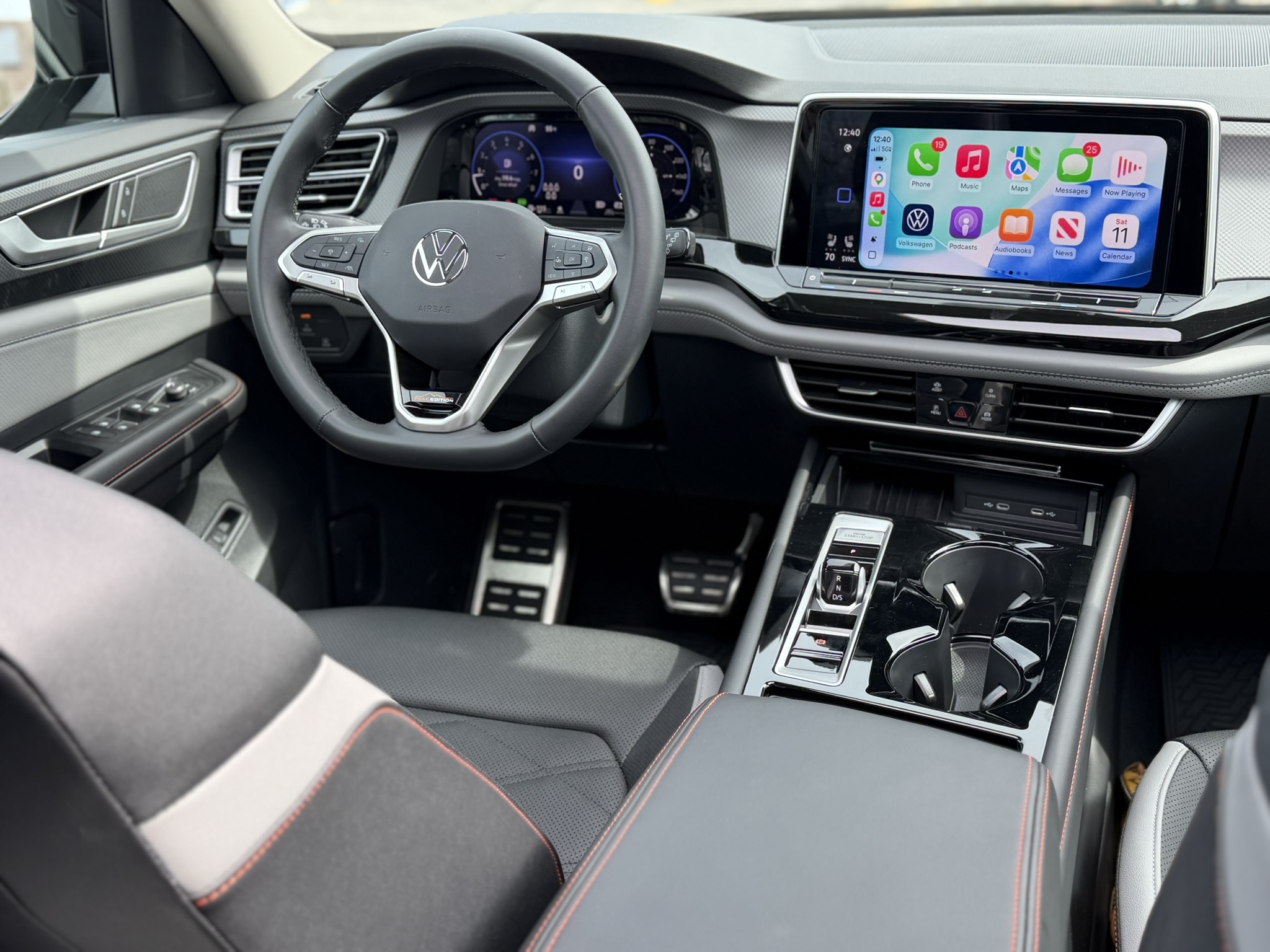
Enhanced technology in the Atlas offers a more connected experience. A 12-inch floating infotainment display is a focal point in the cockpit. Behind the steering wheel drivers will face a 10.25-inch fully configurable Digital Cockpit Pro with up to four views-including full-screen navigation for equipped models-and numerous viewing options. It features 21 viewing options including car status, full screen navigation, phone information, driver assist features, and more. One of the changes for 2026 is the addition of a factory-installed HomeLink auto-dimming rearview mirror on SE with Technology trims and above. This adds integrated garage door and smart-home controls.
The Atlas connects wirelessly to Apple CarPlay or Android Auto, and it works well. Wireless charging, a six-speaker sound system, and six USB-C ports with 45-watt fast charging round out the technology inside. While the system is intuitive, it does lack traditional knobs and controls for volume and climate. Instead, it utilizes haptic touch controls similar to a phone. It provides a cleaner looking dash, but functionality can be delayed when it's cold causing more frustration than necessary. There are traditional buttons on the steering wheel for audio controls which I found myself using instead of the touchscreen. Also available is a head-up display, remote engine start, and a Harmon Kardon premium audio system with a center speaker and subwoofer.
The Atlas also has a new electronic gear shifter in the center console. The stubby knob tips forward for reverse and down for drive. A separate button for Park is just above the shifter, and the electronic parking brake is below it. Two cup holders are to the right of the gear selector making everything appropriately placed and functional.
Cargo Capacity:
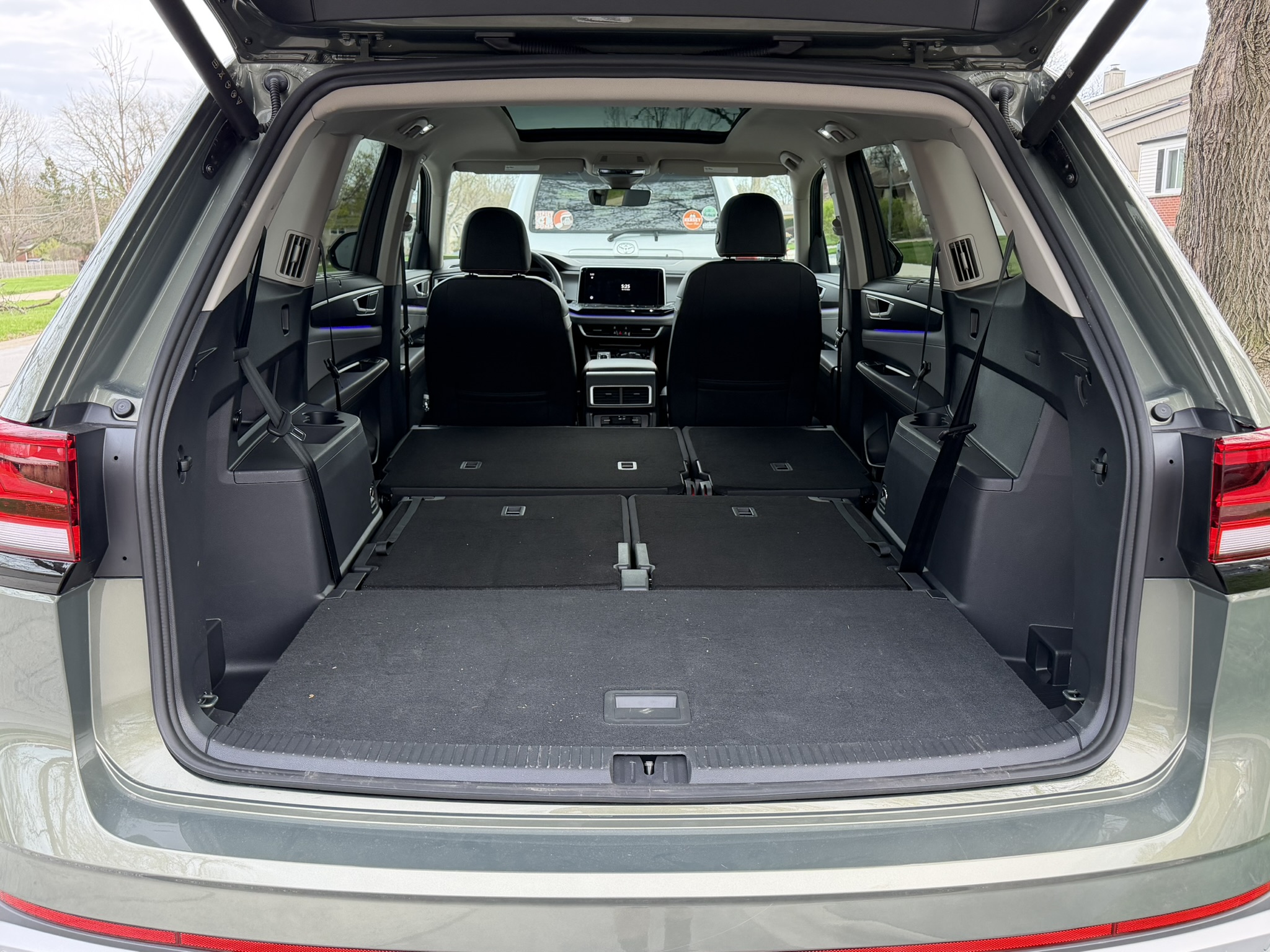
Cargo capacity is a high point as it offers 20.6 cubic feet of space behind the third row, 55.5 cubic feet behind the second row (with third row folded flat) and 96.6 cubic feet with both rows folded flat, making it impressive in class. An available power liftgate and hands-free power liftgate make it very user friendly. The hatch opening is wide and split second-row seats provide a variety of configurations for hauling.
Safety:
To help protect occupants, the Atlas provides a combination of both passive and active safety systems. It features six airbags as standard (front and side airbags for front passengers and side curtain airbags for outboard seating positions), along with several electronic safety systems, such as an Anti-lock Braking System and Electronic Stability Control. All Atlas models feature a standard rearview camera.
Volkswagen's IQ.DRIVE advanced driver assistance technology features hands-on semi-automated capability. On the highway, IQ.DRIVE features lane centering and a capacitive steering wheel to make driving easier. Around town, IQ.DRIVE alerts you to surprise obstacles in front of you and keeps an eye around you to help make driving safer.
The IQ.DRIVE system is standard on all trims for model year 2026. The system utilizes front and rear radar, a front camera and several ultrasound sensors to collect data from the surrounding area, enabling Travel Assist (semi-automated driving assistance); Front Assist (Forward Collision Warning and Automatic Emergency Braking with Pedestrian Monitoring); Active Side Assist (Blind Spot Monitor); Rear Traffic Alert; Adaptive Cruise Control (ACC) Stop and Go; Lane Assist (Lane Keeping System); and Emergency Assist (semi-automated vehicle assistance in a medical emergency).
In addition to IQ.DRIVE, the Atlas has standard Exit Warning, and available Park Distance Control, Park Assist (Parking Steering Assistant), Dynamic Road Sign Display, Head-up Display, Predictive ACC, Light Assist (High Beam Control for headlights) and Area View (Overhead View Camera).
Two final driver assistance features help provide drivers with better visibility. Light Assist, standard on SEL trims, automatically switches on the headlamp high beams above 18 mph on dark or poorly lit roads, if there is no oncoming traffic detected. Below 12 mph, the high beams automatically switch off. Area View, standard on SEL Premium R-Line, uses the car's four cameras to supplement the driver's view of what is around the vehicle.
Final Statement:
The Atlas continues to be a popular choice in the midsize segment for good reason. The powertrain continues to be more efficient and will continue to be with the next generation in 2027 that plans to introduce a hybrid. The Atlas offers ample space inside to cater to its target buyers and comes loaded with safety features. Technology is on par with others in the class and its style is refined, but classic. The touch controls can be a bit cumbersome but is something owners may get used to. Competition is tough in this segment so be sure to drive a few competitors to see what vehicle best fits your lifestyle. If you like this model, there may be good deals to be had before the next generation 2027 model hits dealer lots.